 |
 |
| home |
| group |
| gerda main |
| internal |
| uzh physics |
GERDA research group at the University of Zurich |
||||
GERmanium Detector Array (GERDA)
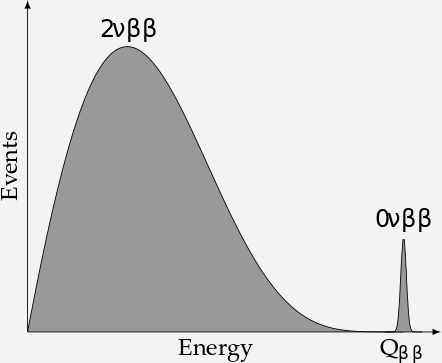
The Detector The detector setup of GERDA is depicted in Fig.1. Its heart, source and detector at once, are 7 strings of 3-8 enriched Germanium diodes, each weighting between 0.4 and 2.8 kg and adding up to a total of 38 kg of active mass. Since 0νββ can only be potentially observed in 76Ge, with only 7.6% natural abundance, the diodes are enriched to about 87%. Applying a reverse bias voltage to the diodes, a current signal occurs if an ionizing interaction happens inside the diode, e.g., from the two electrons emitted by a 0νββ decay. 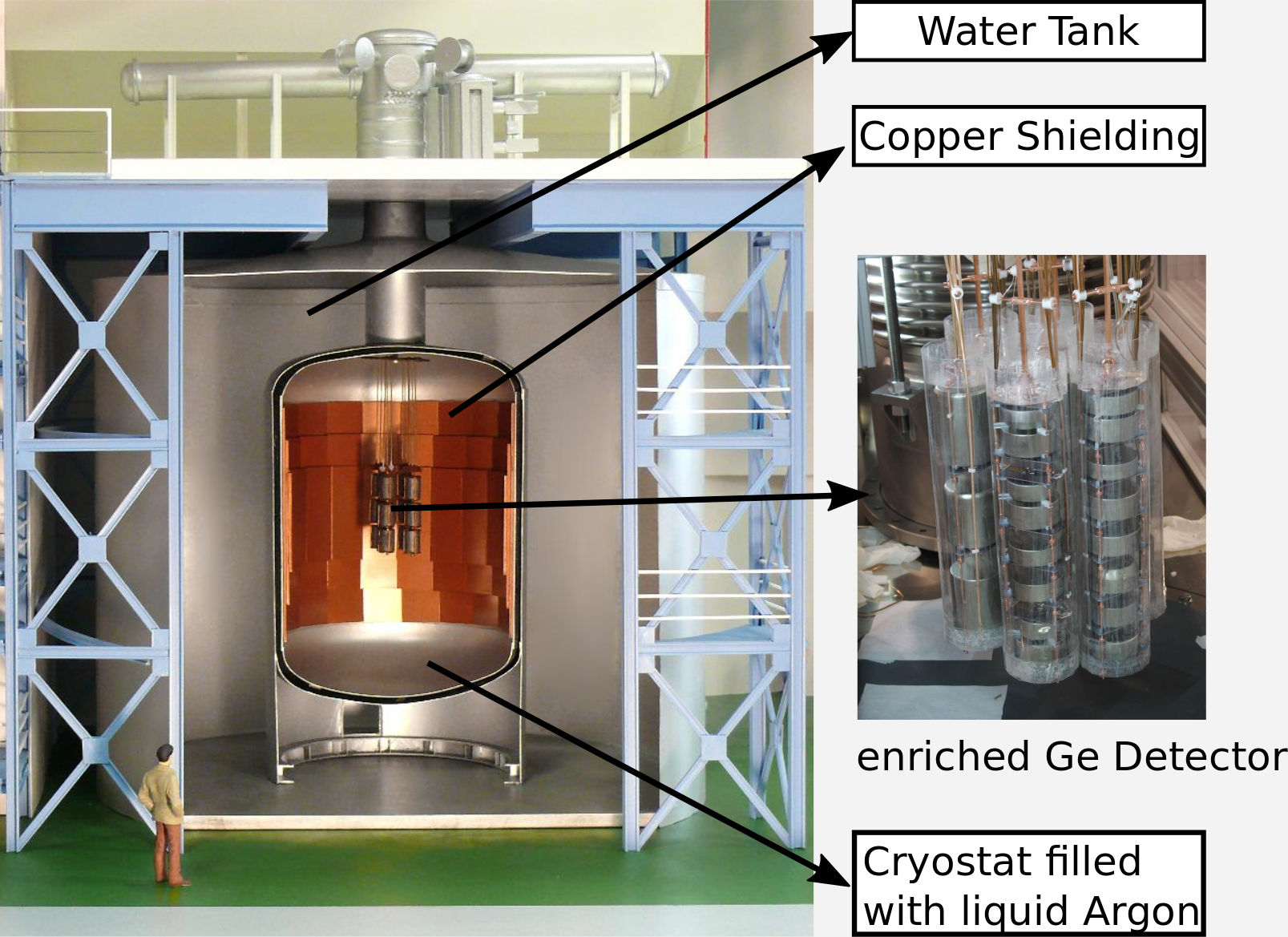 Fig.1: Illustration of GERDA. The Germanium diodes are protected by several layers of avtive an passive shieldings from external radiation. Fig.1: Illustration of GERDA. The Germanium diodes are protected by several layers of avtive an passive shieldings from external radiation.
The main challenge for the measurement is then to avoid all undesired backgrounds from external sources of radioactivity. Therefore, several layers of active and passive shielding are put around the Germanium diodes. 1.4 km of rock above the LNGS reduce background from cosmic rays from ~10 000 000 to 1 per hour and square meter. Additional plastic scintillator panels above the experiment detect and exclude the ramining few cosmic ray particles. A 10 m diameter water tank is put around the experiment, equipped with photo multiplier tubes inside, as a shielding and veto. Inside the water tank resides the cryostat, a cylindric 2 m diameter tank, passively shielded on the inside with pure copper, and filled with liquid Argon. The Argon fulfills two tasks: It is a coolant liquid for the diodes and, being a scintillating material, photo multipliers inside the cryostat are used to detect and exclude events from particles crossing the cryostat. The remaining background originates from the holding structure and cables for the diodes and unavoidable impurities in the Argon. A recorded spectrum with identified background sources is depicted in Fig.2. 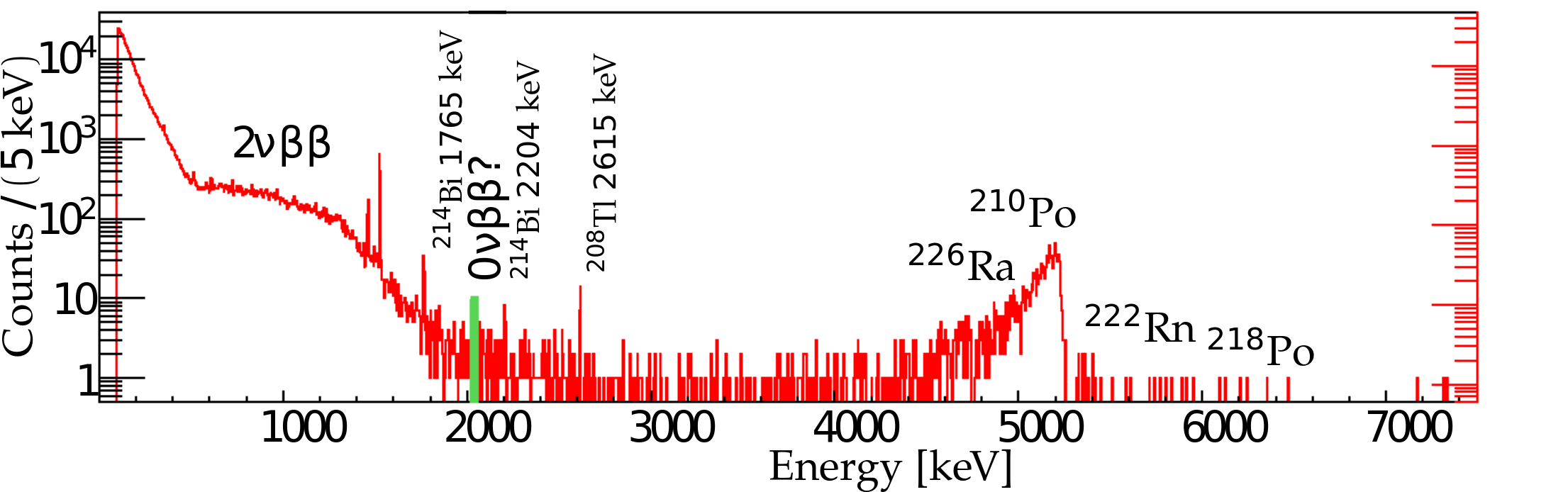 Fig.2: Energy spectrum of GERDA PhaseI after 1 year of operation. Identified sources of background are indicated. Fig.2: Energy spectrum of GERDA PhaseI after 1 year of operation. Identified sources of background are indicated.
Performance
References
| ||||