Latest News
News list
-
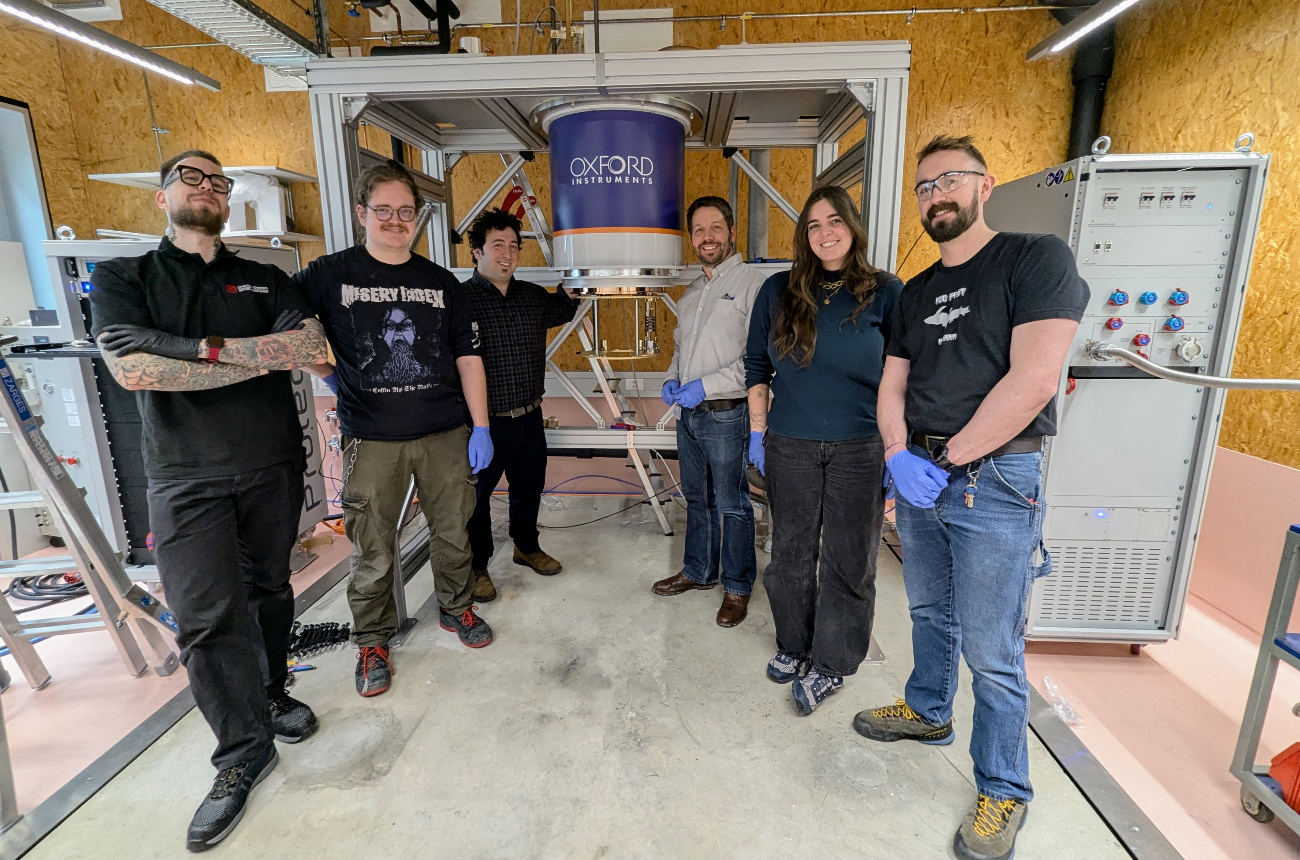
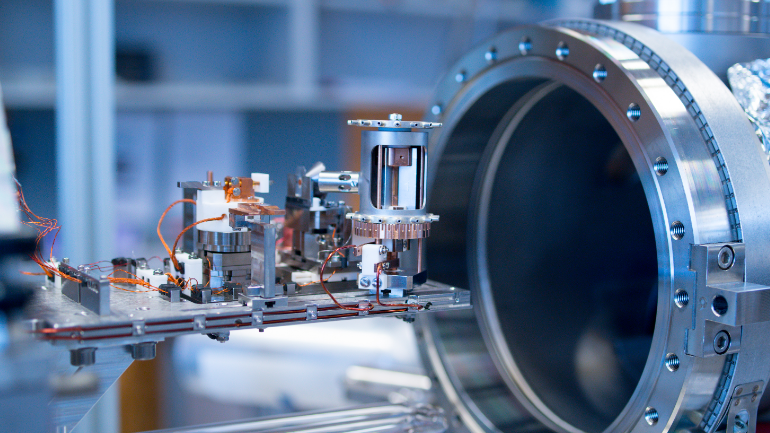
New Dilution Fridge in Y56
An Oxford Instruments dilution fridge was installed and commissioned in the new ultra-low temperature lab for dark matter searches and the development of quantum sensors in Y56.
-
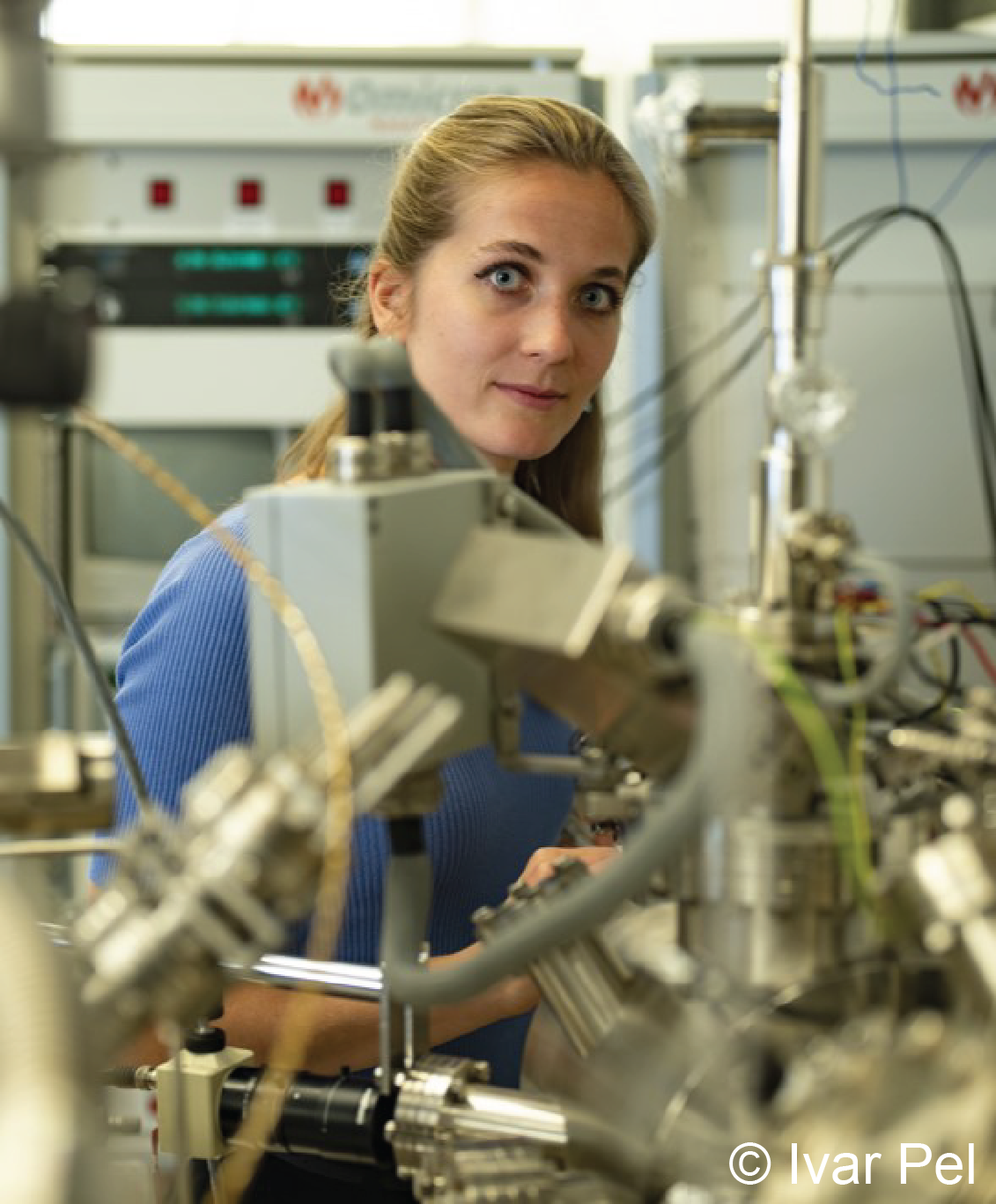
Marie Skłodowska-Curie postdoc grant for Rian Ligthart
Rian Ligthart (postdoc in group Natterer) won a Marie Skłodowska-Curie postdoc grant.
Her project "WAVE" will explore suspended Weyl materials in the few to single layer limit using scanning tunneling microscopy tools developed at UZH.
-

NCCR Muoniverse approved with UZH as co-leading house
UZH and PSI will jointly host the National Center for Competence in Research (NCCR) Muoniverse, which brings together more than 30 teams across Switzerland to use muons for fundamental science and applications-oriented research.
-
Physik-Institut participating in NASA study to track the Artemis II moon mission
NASA's Artemis II mission will launch in February 2026 with four astronauts on board for the first crewed mission around the moon in over 50 years. In August 2025, non-NASA organizations were invited to apply for a study to find out if and how data from small receiving stations can be used to determine the trajectory of the Orion spacecraft.
The radio telescope installed on the roof of building Y36 as part of the “Schulen am Irchel” project is capable of performing very precise frequency measurements at 2216 MHz and, using the Doppler effect, measuring the relative speed to the spacecraft very accurately. In January 2026, NASA announced the participants in this study: 34 organizations and private individuals spread across 14 countries, including the University of Zurich. The plan is to define and implement a corresponding observation program in collaboration with students from UZH and KZN.
-
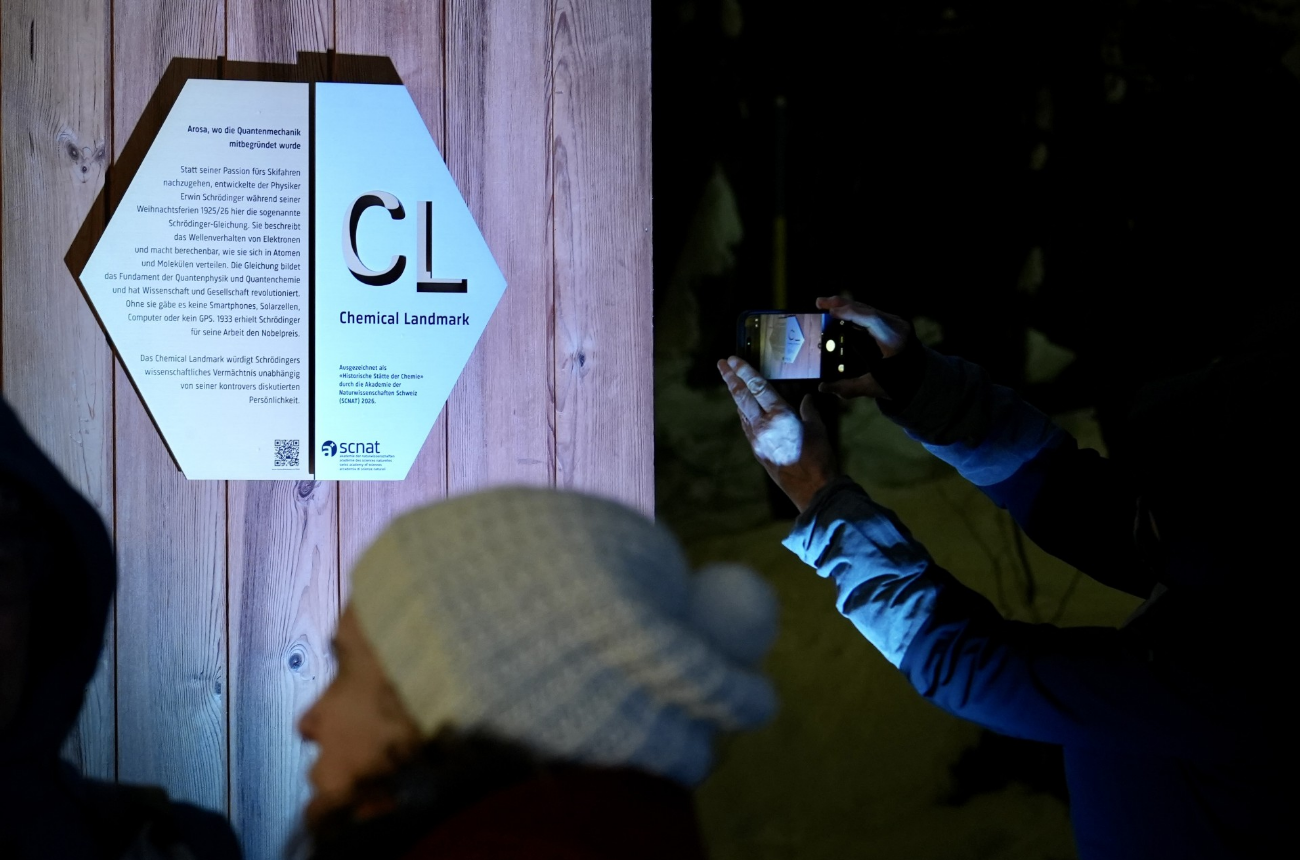
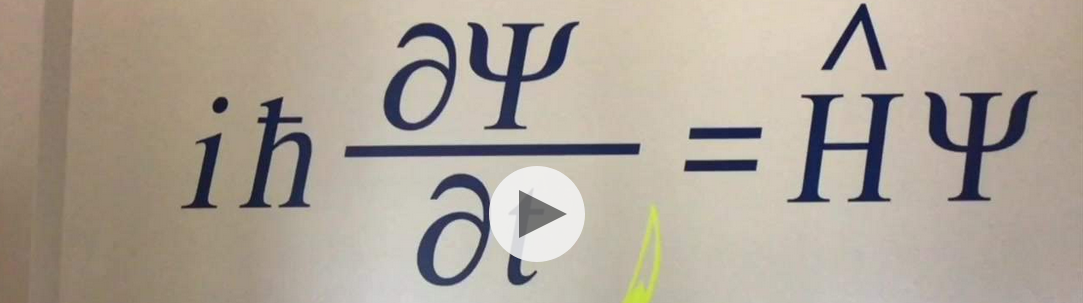
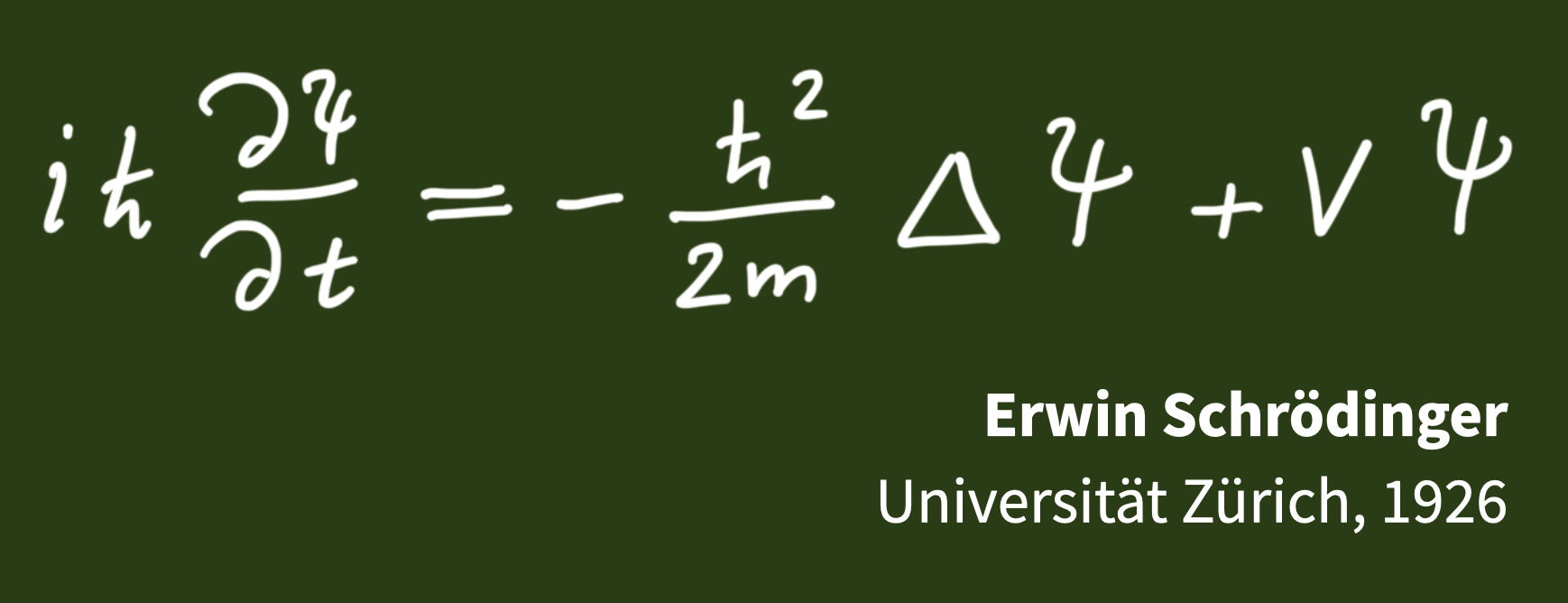
100 years Schrödinger Equation - chemical landmark in Arosa
In Arosa, Erwin Schrödinger laid the foundations of quantum physics and quantum chemistry, subsequently revolutionizing science and society. This site has now been recognized as Chemical Landmark by SCNAT.
Erwin Schrödinger was a professor at the University of Zurich from 1921 to 1927, and during this time he revolutionized physics by creating a new atomic theory: matter – for example, electrons – has both particle and wave properties. This contradicted the prevailing opinion of leading physicists of the time, who assumed that electrons were particles. With this, he laid the foundation for quantum physics and quantum chemistry and was awarded the Nobel Prize in Physics in 1933. Arosa played a central role in this scientific achievement and has now received a Chemical Landmark from the Swiss Academy of Sciences (SCNAT).
-
Chiral surface states from 3D Landau bands
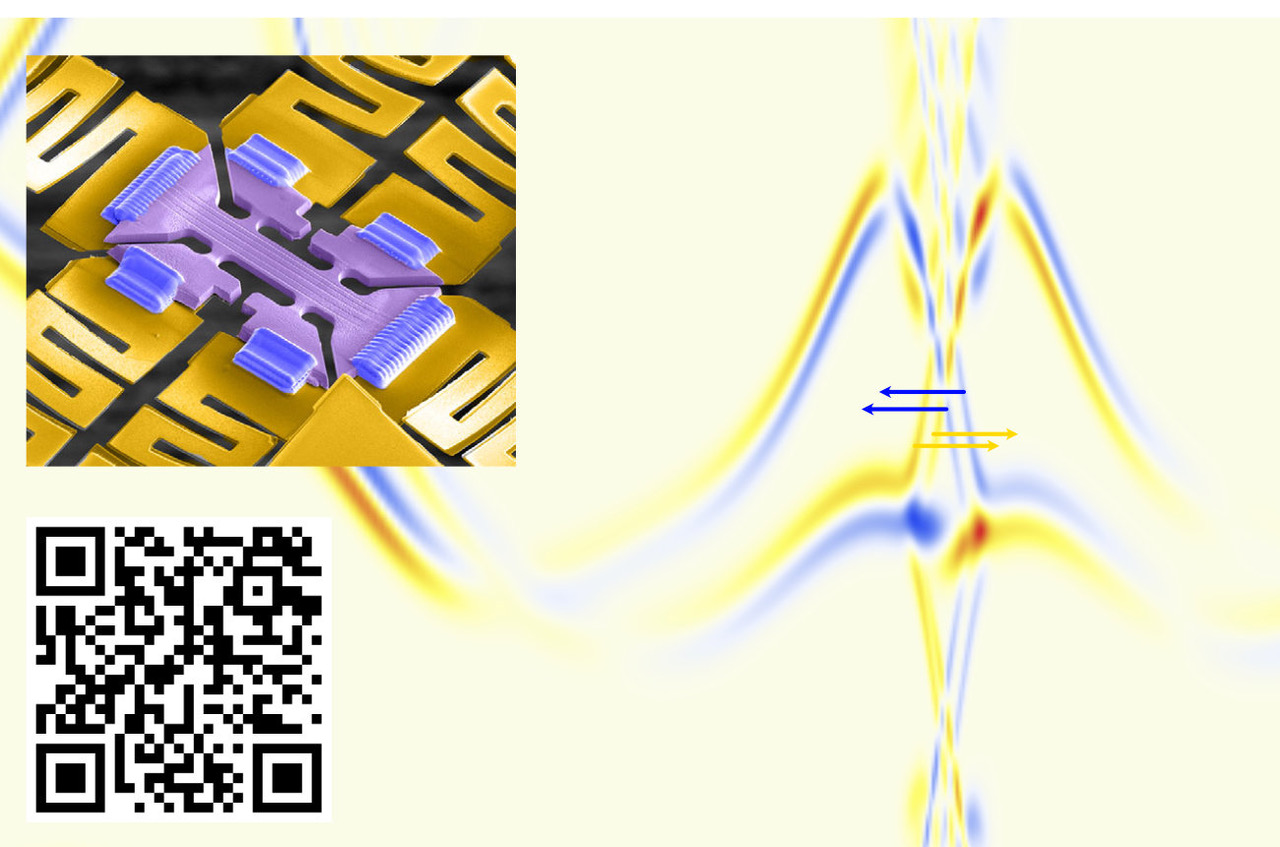
In a collaboration with the group of Philip J. W. Moll (MPI Hamburg), Mark H Fischer and Titus Neupert have studied the enhanced surface conduction in the quantum limit of the 3D semimetal bismuth. In particular, the researchers found an increase in conductivity as material is removed by a focused ion beam, a finding contrasting the intuitive expectation. Three-dimensional chiral surface states – 3D analogues of the well-known quantum Hall states in 2D – naturally account for the observed increase. The researchers' results, published in the journal Nature Physics, introduce a new approach for utilizing chiral conduction on the surfaces of 3D materials, offering a host of design options lacking in two-dimensional systems.
DOI: https://doi.org/10.1038/s41567-025-03146-7
The figure shows the Surface spectral function of a Bi slab in a strong magnetic field, the inset scanning electron microscopy images of a microstructured bismuth.
-
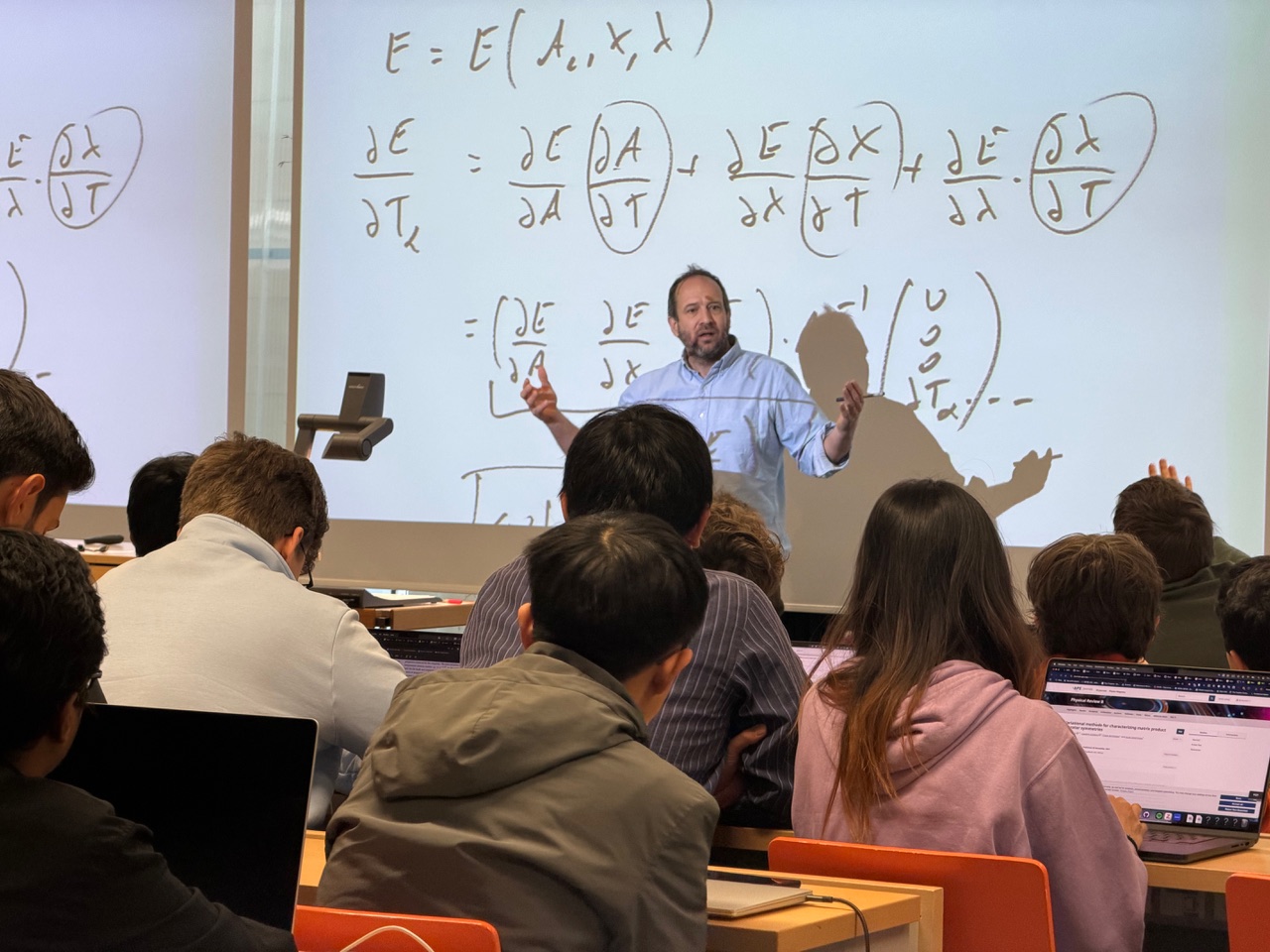
Physicists Met at UZH to Empower Tensor Networks
From 14–16 January 2026, the Department of Physics at the University of Zurich hosted FIXNET 2026, a three‑day in‑person workshop dedicated to fixed-point optimization in tensor networks for quantum matter. The event brought together leading experts and early‑career researchers to discuss recent advances in numerical methods for simulating strongly correlated quantum materials—systems central to phenomena such as high‑temperature superconductivity, quantum magnetism, and topological phases.
The workshop was organized as a Pauli Center workshop by a team spanning UZH, ETH Zurich, and international partners with support from the MaNEP Network and the Swiss National Science Foundation. With a strong lineup of speakers from major research institutions across Europe and beyond, FIXNET 2026 strengthened Zurich’s role as a hub for innovation in computational quantum physics.
Additional Information
- 02/26 Dilution Fridge installed and commissioned in Y56
- 02/26 Marie Skłodowska-Curie postdoc grant for Rian Ligthart
- 02/26 NCCR Muoniverse - a Leap for Muon Science
- 01/26 Physik-Institut follows the moon mission
- 01/26 100 years Schroedinger equation
- 01/26 Chiral Surface States
- 01/26 FIXNET: UZH Workshop on Tensor Networks
- 9/25 New Fundamental Physics Laboratory at the BedrettoLab
- More News