Bedretto Physics
A New Underground Physics Lab
The BedrettoLab (Bedretto Underground Laboratory for Geosciences and Geoenergies) aims to provide Swiss researchers with a dedicated facility for conducting leading fundamental physics research, taking advantage of the low-background environment to enable new discoveries.
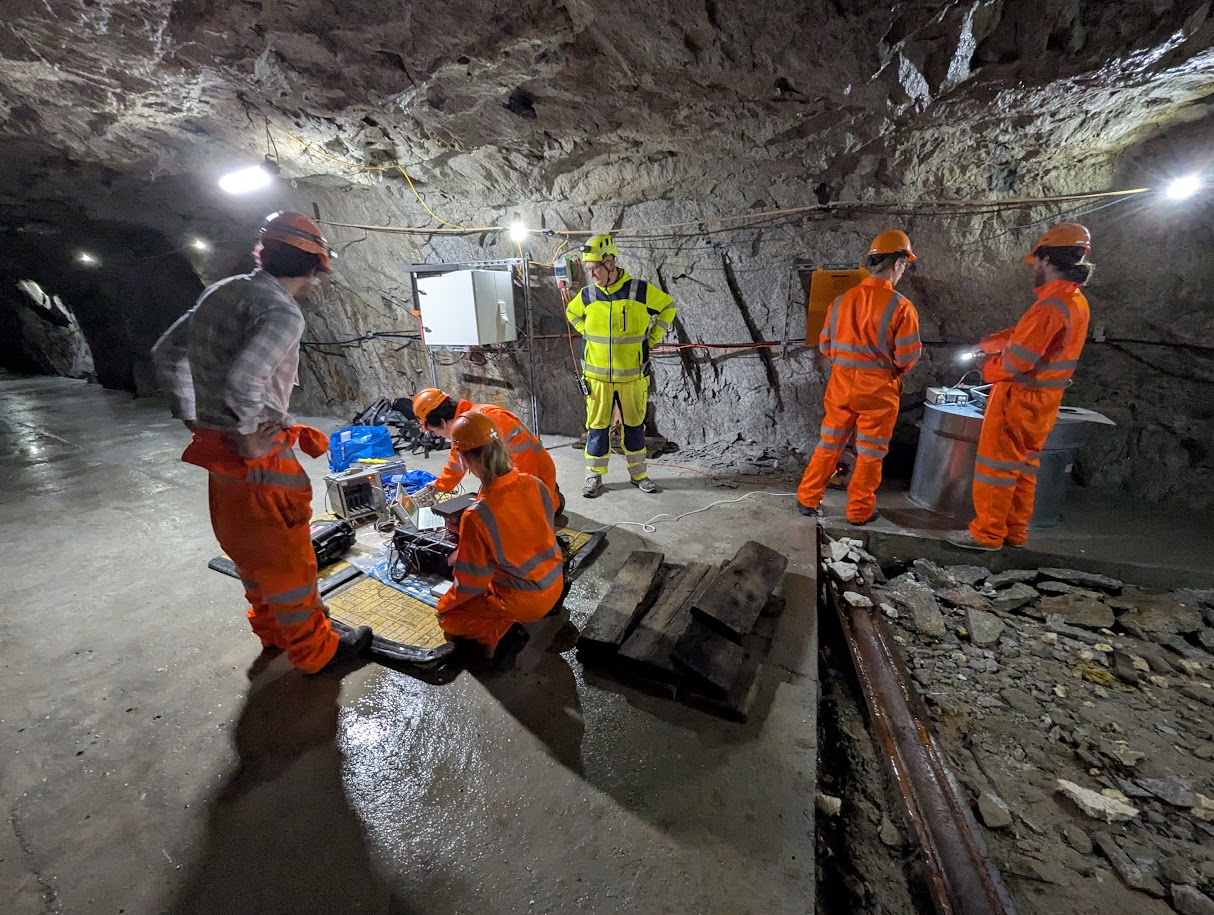
In early 2025 the UZH Particle Physics team began their measurement campaign of radioactivity backgrounds of the underground space. These involved measurements of cosmic muons, gamma rays and neutrons from the rock and radon in the air at the underground location where physics experiments could one day be hosted. We hope this is the first step to a lot of cutting edge R&D and research.
Highlights
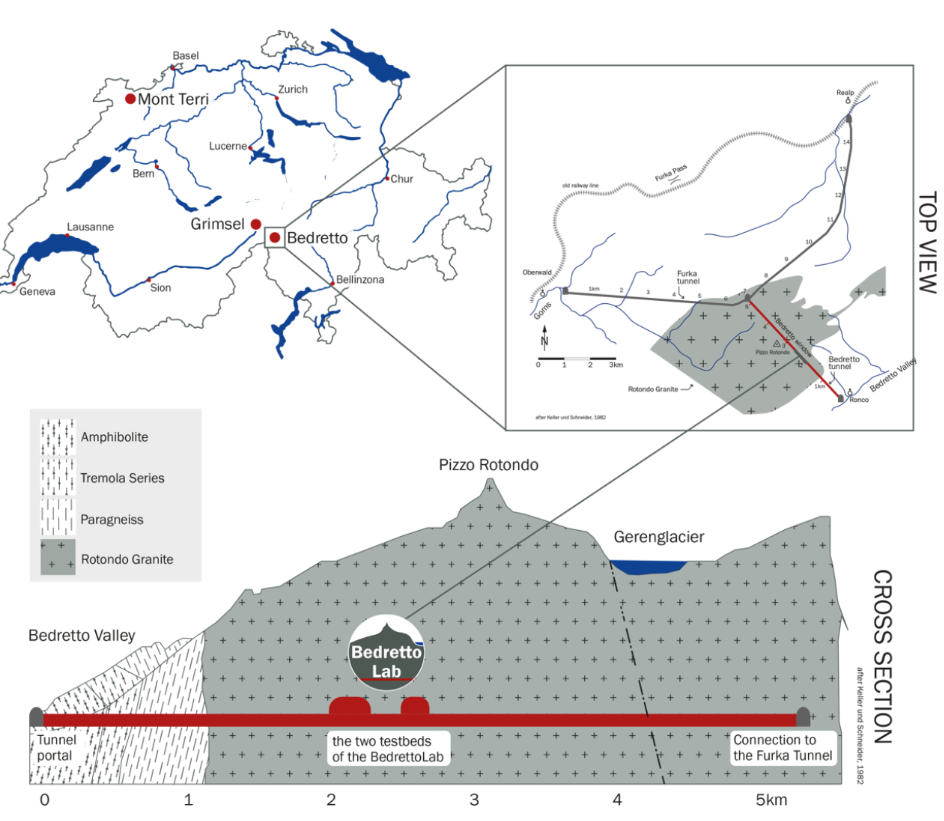
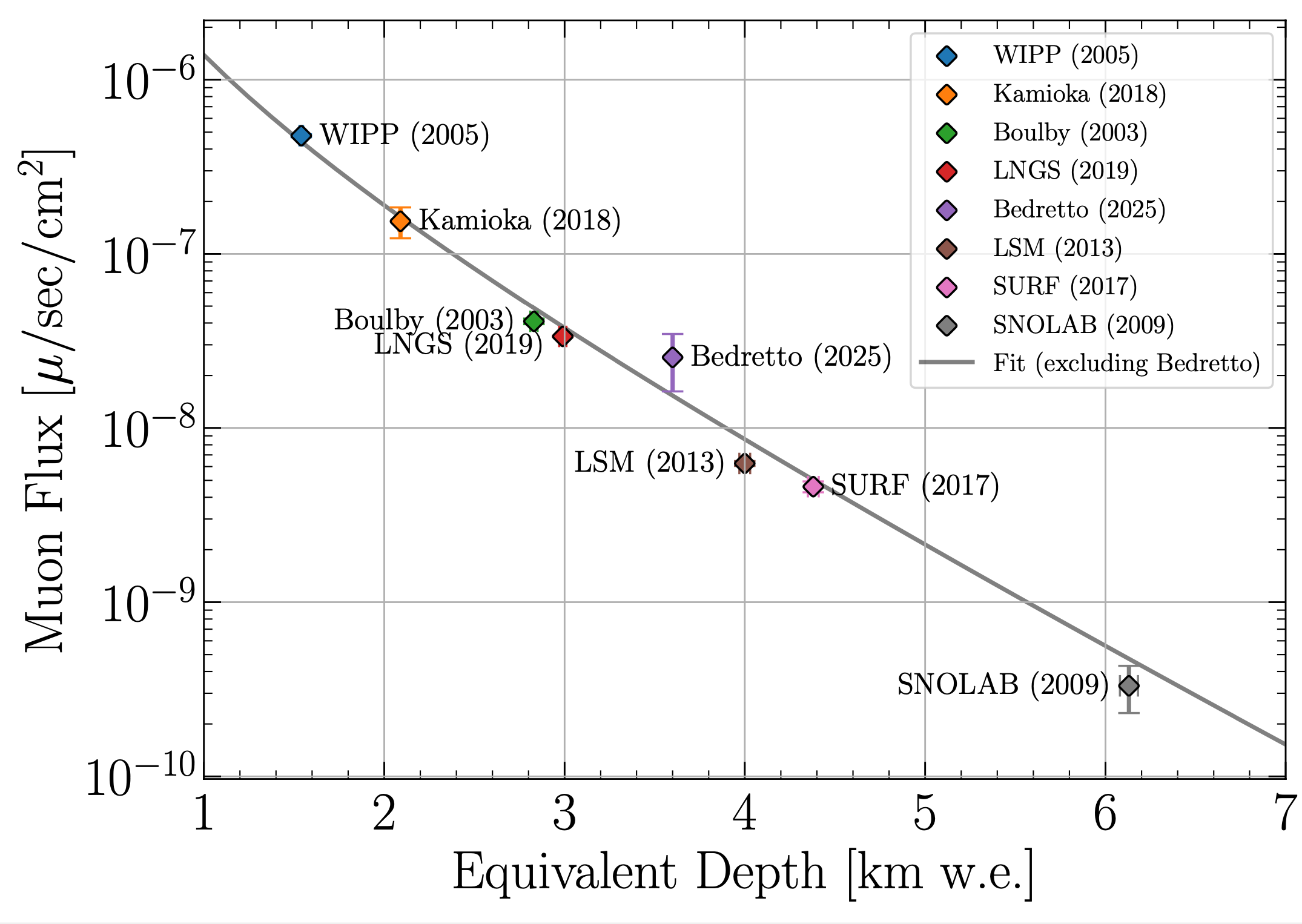
- 5.2 km long, connecting the Furka train tunnel to the Bedretto valley 1’000 - 1’500 m overburden (comprable to LNGS underground lab in Italy)
-
Underground laboratories provide crucial shielding for rare event detection experiments.
-
The BedrettoLab is a new facility in Switzerland that provides a well-shielded environment for fundamental physics research.
-
The BedrettoLab project has three phases of increasing complexity, from initial radiation measurements to developing advanced detectors for dark matter, neutrinos, and gravitational waves.
Underground Physics
Underground laboratories are essential for fundamental science due to their unique shielding from cosmic rays and natural radioactivity, enabling the detection of rare events that are at the surface not distinguishable against the overwhelming background of cosmic radiation. Underground shielding against cosmic rays is crucial for particle and astroparticle physics such as neutrino measurements and dark matter searches, nuclear astrophysics, and low-background experiments. Furthermore, the stable, low-noise and low-vibration environment offered by underground locations can be highly beneficial for gravitational wave searches and quantum sensors that are susceptible to vibrations and even quantum computing where decoherence of the quantum states can be caused by both, cosmic rays and vibrations.
We aim to establish a Swiss underground laboratory suitable for fundamental physics R\&D. The BedrettoLab was established in 2019 in a side tunnel of the Furka Tunnel for geological research. It offers a unique opportunity for UZH researchers to conduct leading research in a well-shielded underground environment.
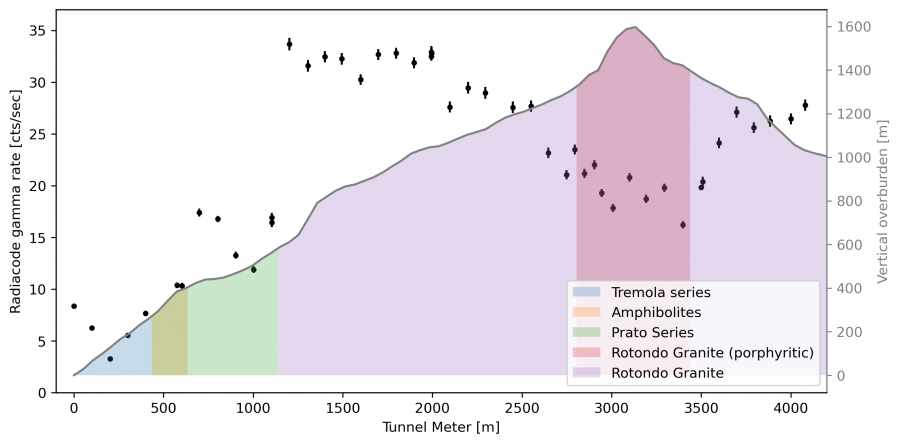
The Bedretto UndergroundLab will be one of the deepest underground labs in Europe and the most quiet.
Planned Development Stages
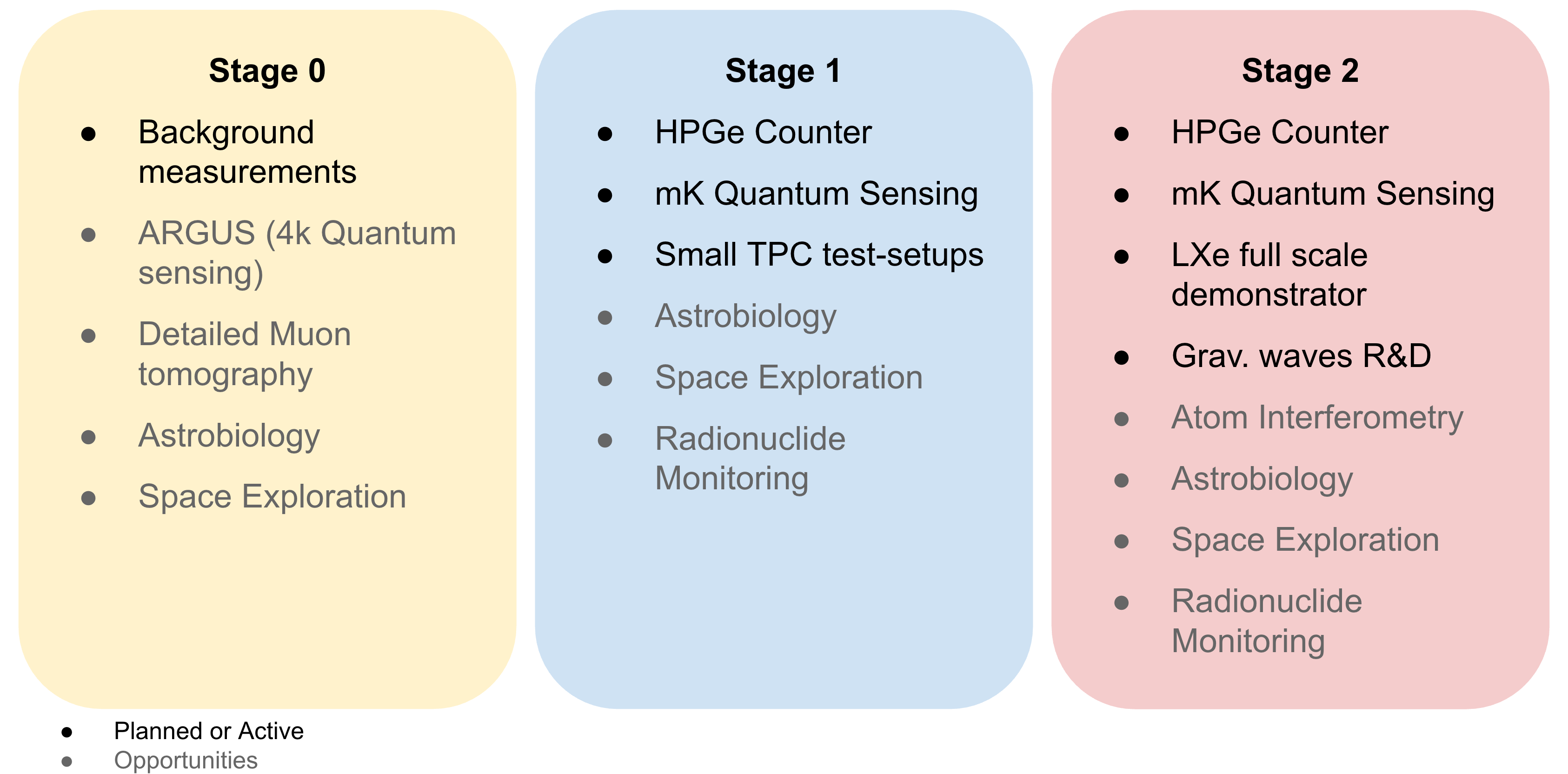
We are aiming for a a comprehensive research program that begins in its first stage by developing clean lab space and operating High Purity Germanium counters for material screening that supports of state-of-the-art rare event searches and enivronmental monitoring. In the second stage we will then extend to host underground measurement and R&D setups, such as Liquid Xenon test setup and a dilution refrigerators for quantum sensors, and testing of underground instrumentation for exampel for neutrino physics and gravitaional wave setups. In the final stage we are aiming at a large scale gravitational wave setup. Significant opportunities also exist within space exploration and astrobiology, particularly regarding the deep biosphere. THe extreme and isolated environment of BedrettoLab serve can serve as an extraterrestrial environment analogue, providing realistic conditions to Mars rovers and refine strategies for biomarker detection.
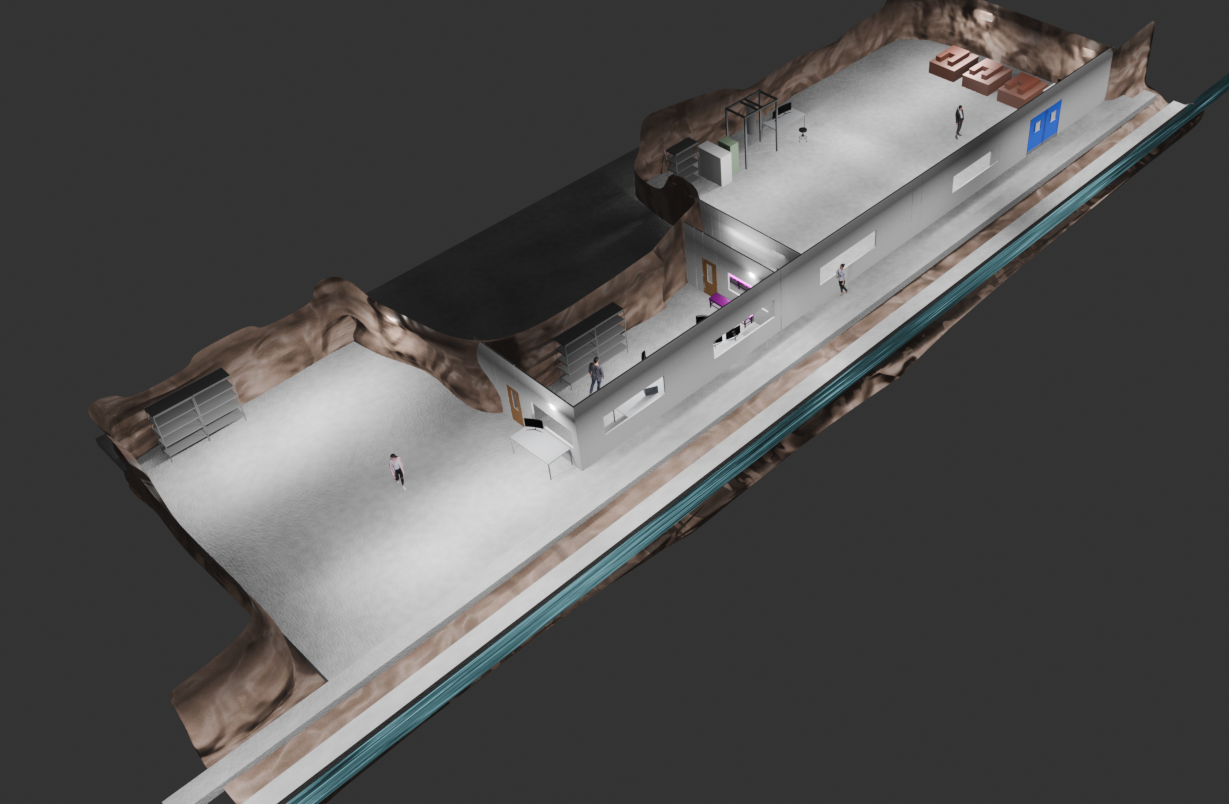
The laboratory will be established within an existing cavern about 3500m into the tunnel, close to the maximal overburden and with lowest background radiation. The cavern will be expanded to accommodate experimental infrastructure and the rocks walls will be lined with shotcrete to suppress radon emanation and shield against background gamma and neutron radiation. The primary workspace will function as a low-radon clean room, maintained at a slight overpressure with a supply of fresh external air to ensure environmental purity. An entry airlock and a dedicated control room will be installed to preserve clean conditions during data acquisition.